Pediatric Traumatic Optic Neuropathy: A Case of Emergency Multidisciplinary Surgical Decompression
DOI:
https://doi.org/10.46900/apn.v8i2.379Keywords:
traumatic optic neuropathy, orbital roof fracture, pediatric trauma, optic nerve decompression, emergency surgeryAbstract
Background: Traumatic optic neuropathy (TON) following orbital roof fractures is rare in pediatric populations but represents a surgical emergency due to risk of permanent blindness. Approximately 1.6% of traumatic brain injury cases involve direct optic nerve injury. Orbital roof fractures in children are uncommon and may be associated with frontal lobe injury, dural tears, and proptosis. Early recognition and multidisciplinary intervention are critical for visual preservation.
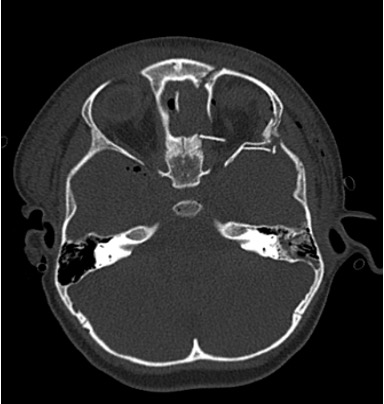
Case Presentation: A 2-year-old girl sustained high-energy motor vehicle trauma resulting in left orbital roof fracture with optic nerve compression. Clinical examination revealed proptosis, anisocoric pupil without photoreaction, and restricted ocular movement. Computed tomography confirmed displaced orbital roof fracture compressing the optic nerve. Emergency multidisciplinary surgery was performed via medial superior palpebral approach with bone fragment repositioning and optic nerve decompression. Intraoperative cerebrospinal fluid leak resolved spontaneously with conservative management. At 28 months postoperatively, the patient demonstrates complete visual recovery without diplopia, exophthalmos, or dystopia.
Conclusion: Pediatric orbital roof fractures with optic nerve compression require immediate surgical decompression to prevent permanent visual loss. Multidisciplinary collaboration between neurosurgery, oral-maxillofacial surgery, and ophthalmology is essential. Despite potential complications including CSF fistula, timely intervention can achieve excellent functional outcomes.
Downloads
Published
How to Cite
Issue
Section
License
Copyright (c) 2026 Déborah Laurindo Pereira Santos , Renato Torres Augusto Neto , Mário Francisco Real Gabrielli, Eduardo Hochuli Vieira

This work is licensed under a Creative Commons Attribution 4.0 International License.

When publishing in Archives of Pediatric Neurosurgery journal, authors retain the copyright of their article and agree to license their work using a Creative Commons Attribution 4.0 International Public License (CC BY 4.0), thereby accepting the terms and conditions of this license (https://creativecommons.org/licenses/by/4.0/legalcode).
The CC BY 4.0 license terms applies to both readers and the publisher and allows them to: share (copy and redistribute in any medium or format) and adapt (remix, transform, and build upon) the article for any purpose, even commercially, provided that appropriate credit is given to the authors and the journal in which the article was published.
Authors grant Archives of Pediatric Neurosurgery the right to first publish the article and identify itself as the original publisher. Under the terms of the CC BY 4.0 license, authors allow the journal to distribute the article in third party databases, as long as its original authors and citation details are identified.