Aggressive Behavior and Intracranial Extension in Nasal Chondromesenchymal Hamartoma: Two Pediatric Cases and Literature Review
DOI:
https://doi.org/10.46900/apn.v8i2.367Keywords:
Nasal chondromesenchymal hamartoma, Intracranial extension, Pediatric tumor, Skull base, RecurrenceAbstract
Introduction/Background: Nasal chondromesenchymal hamartoma (NCMH) is a rare benign mesenchymal tumor that predominantly affects infants and young children. Although traditionally considered non-aggressive, selected cases demonstrate locally invasive behavior, including skull base erosion and intracranial extension.
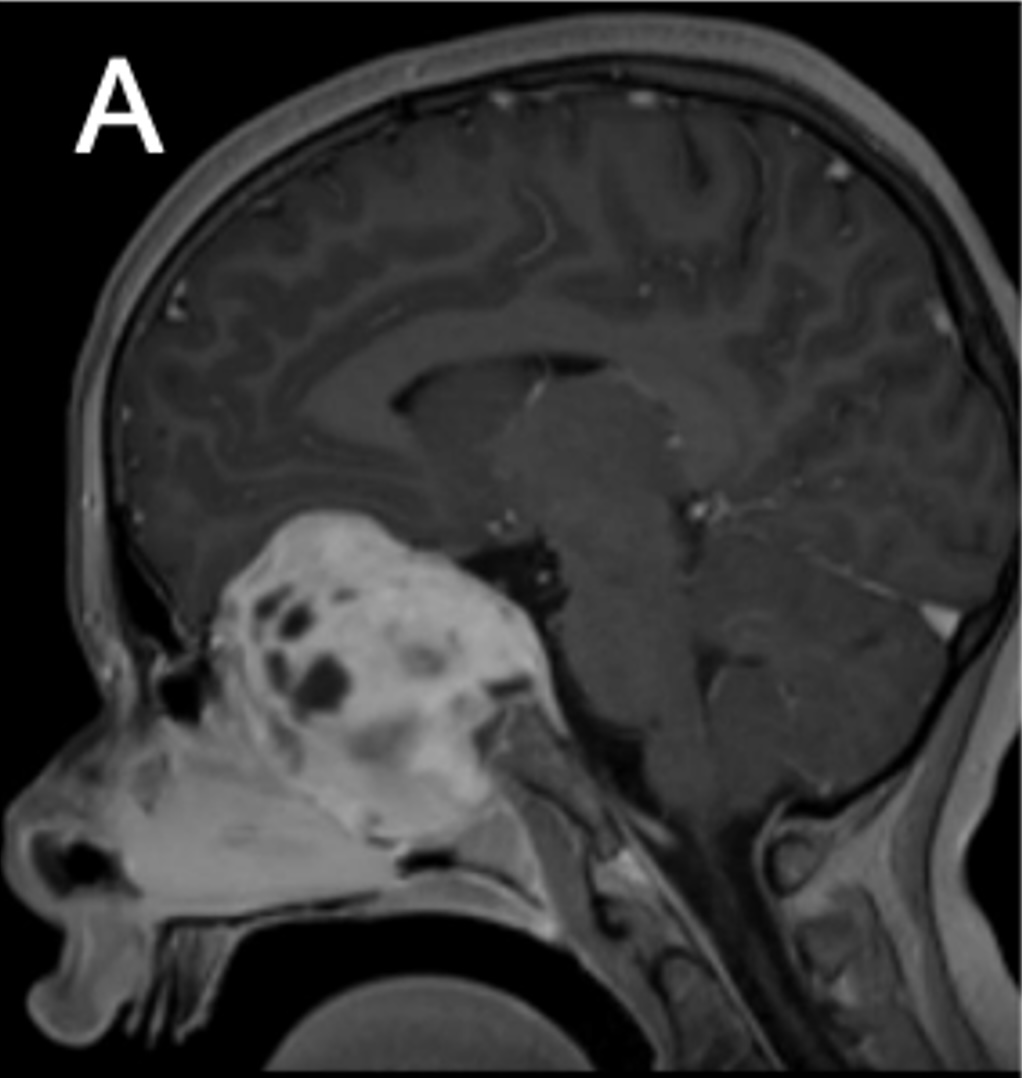
Case Presentation: We report two pediatric cases of NCMH with aggressive clinical evolution. The first case involved a newborn presenting with respiratory distress due to a nasal mass. Despite initial surgical resection, early recurrence occurred within five months, with extension to the skull base requiring further partial resection. The second case involved a 9-year-old girl presenting with progressive visual loss, headache, strabismus, and cerebrospinal fluid rhinorrhea. Imaging revealed a large lesion involving the anterior skull base, suprasellar region, clivus, and paranasal sinuses. Following subtotal endoscopic endonasal resection, the patient developed multiple recurrences requiring repeated surgical interventions and evolved with sixth cranial nerve palsy.
Conclusions: NCMH may exhibit unexpectedly aggressive behavior despite its benign histopathology. These cases highlight the importance of achieving maximal safe resection, close long-term imaging surveillance, and a multidisciplinary management strategy, particularly in cases of incomplete resection.
Downloads
Downloads
Published
How to Cite
Issue
Section
License
Copyright (c) 2026 José Luis Quelho Filho, Carlos Ranieri Tiano Bastos Novaes Fagundes, Leonardo Peixoto Garcia, Wilson Guilherme Aparecido Nascimento, Linoel Curado Valsechi, Gustavo Botelho Sampaio

This work is licensed under a Creative Commons Attribution 4.0 International License.

When publishing in Archives of Pediatric Neurosurgery journal, authors retain the copyright of their article and agree to license their work using a Creative Commons Attribution 4.0 International Public License (CC BY 4.0), thereby accepting the terms and conditions of this license (https://creativecommons.org/licenses/by/4.0/legalcode).
The CC BY 4.0 license terms applies to both readers and the publisher and allows them to: share (copy and redistribute in any medium or format) and adapt (remix, transform, and build upon) the article for any purpose, even commercially, provided that appropriate credit is given to the authors and the journal in which the article was published.
Authors grant Archives of Pediatric Neurosurgery the right to first publish the article and identify itself as the original publisher. Under the terms of the CC BY 4.0 license, authors allow the journal to distribute the article in third party databases, as long as its original authors and citation details are identified.